 What a Service Call Actually Covers
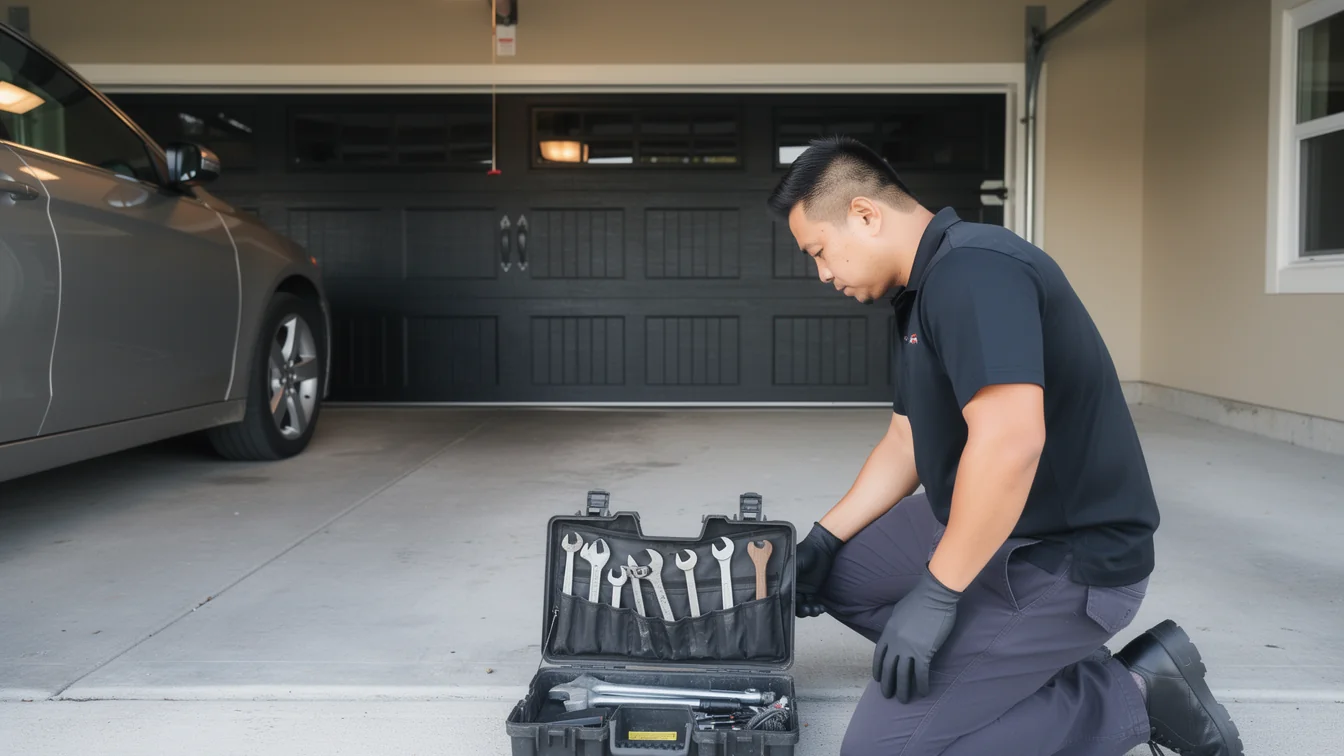
A service call in Rancho Cucamonga usually means a 1960s-70s door, heat-dried lubrication, or hardware as old as the house itself - here's what gets checked.
What Your Garage Door Is Actually Telling You
A guide for Rancho Cucamonga homeowners on which garage door noises point to real wear in 1960s-70s era hardware, and which ones can wait for a scheduled look.
Local detail
The Problem
Most of the housing stock in this service area went up between 1958 and 2007, with a median build year around 1976 and the bulk of it dating from the 1960s and 70s across the 21 named communities we work in. That means a lot of original or first-replacement hardware is still hanging on tracks that were sized and mounted for a door half the weight of what's sold today. When that hardware starts to fail, it doesn't fail quietly. A door that's been fine for years starts making a sound it never made before, and the homeowner isn't sure if it's the spring, the opener, or just an old house settling. The trouble is that a torsion spring nearing the end of its cycle life and a loose roller sound almost identical to someone standing in the driveway. One is a $200 fix scheduled for next week. The other is a door that can drop a hundred pounds of wood or steel on whatever's underneath it. Telling them apart by ear takes knowing what each part sounds like when it's actually failing, not just when it's old.
The area
What Local Conditions Do
This area sits in a moderate heat climate band, which means steel track and hardware go through a daily expansion-and-contraction cycle rather than a seasonal one. On a door installed in the 1960s or 70s, decades of that cycling work bolts loose, stretch hinge holes into ovals, and glaze the inside of nylon rollers so they stop turning smoothly in the track. That's the grinding or scraping sound that shows up on hot afternoons and quiets down by evening - it's metal-on-metal contact that only closes up tight when the track has cooled and contracted back to shape. It's not the same as a spring noise, and it's not something a lube job solves for good if the track itself has walked out of alignment. A door built to mid-70s spec, running on mid-70s hardware, just shows its age differently in this climate than it would somewhere with hard freezes or heavy humidity swings.
What we find
When to Call Someone
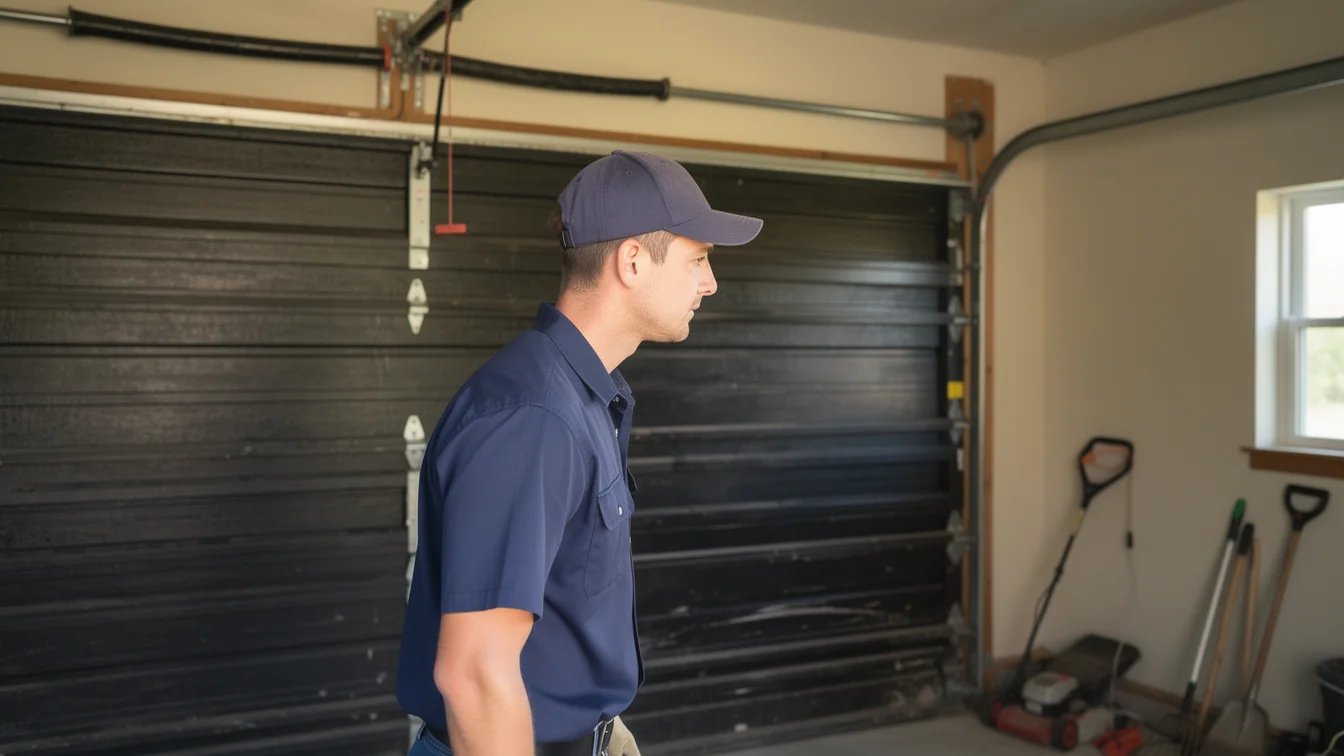
Call if you hear a loud bang followed by the door feeling heavier to lift by hand - that's a torsion spring letting go, and on a door this old the cable drums it's wound around are probably original too. Call if the noise is a rhythmic thunk that gets worse with every cycle, especially on a door that's been opening and closing on the same rollers since before the house had a second owner. Call if the opener motor is straining and groaning on doors with 1960s-era single-piece hardwood panels, since the added weight versus a modern steel door puts more load on an opener that was never sized for it. Any of these on an older system means a full look, not a quick tighten, because one worn part on hardware this age usually means its neighbors aren't far behind.
How we work
When Waiting Is Fine
A single squeak on one roller, consistent and not getting louder, is usually just a dry bearing - lubricate it and listen again next week before you call anyone. A light rattle in the track on a windy day doesn't mean failure if the door still opens and closes smoothly and the rattle doesn't follow you indoors when the wind stops. And a slight hum from the opener motor that's been there as long as you've lived in the house is probably just that motor's normal voice, not a new problem. We'd rather talk you out of a service call for a noise that's cosmetic than run a truck out for something that fixes itself with a can of lithium grease. If the sound hasn't changed in weeks and nothing about how the door moves has changed either, it can wait for your next scheduled service instead of an emergency one.
Questions
Common questions
Why does my garage door only make noise in the afternoon?
In this climate the steel track expands as it heats up through the day, which can shift it just enough to rub against rollers or hinges that have worn loose over the years. On a door from the 1960s or 70s that movement is more pronounced because the hardware has more decades of wear behind it. It usually quiets down once the track cools.
Is a loud bang from the garage always the spring?
Not always, but on a door this old it's the most common cause. A torsion spring that's reached the end of its cycle life snaps suddenly, and the door will feel noticeably heavier to lift by hand afterward. If you hear a bang and then can't open the door without real effort, treat it as a spring until proven otherwise.
Do you replace original 1970s-era hardware or just repair it?
Depends on condition. Original hardware from that era can sometimes be serviced if the track and drums are still true, but we won't pretend a 50-year-old spring system is worth patching piece by piece once more than one part is failing. At that point replacement costs less over time than repeated repair calls.
Recommendation
You Might Also Like
More garage door guides for Rancho Cucamonga homeowners.
What a Service Call Actually Covers
A service call in Rancho Cucamonga usually means a 1960s-70s door, heat-dried lubrication, or hardware as old as the house itself - here's what gets checked.
 Why Your Garage Door Keeps Jumping the Track
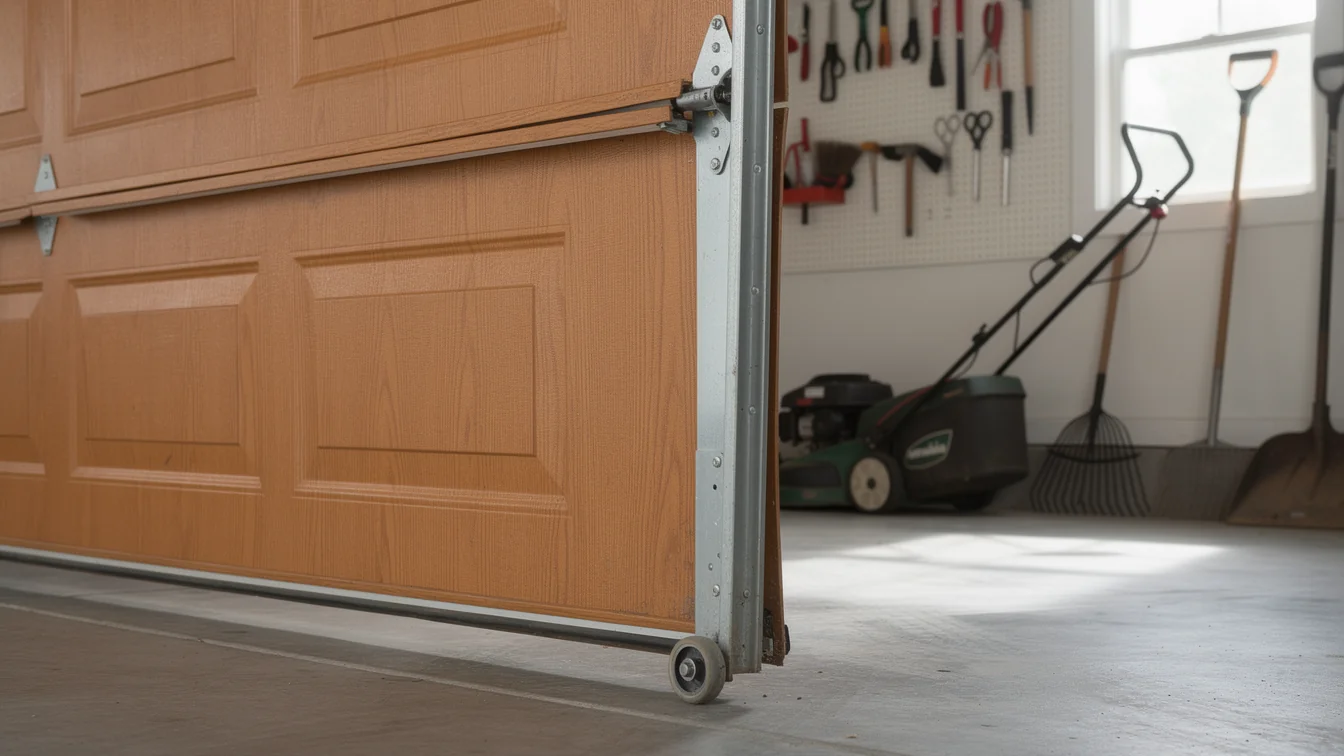
A look at why older Rancho Cucamonga tracks shift out of line, tied to the area's 1958-2007 housing stock and moderate heat band, plus when to call and when to wait.
 What a Power Cut Does to Your Garage Door Opener in Rancho Cucamonga
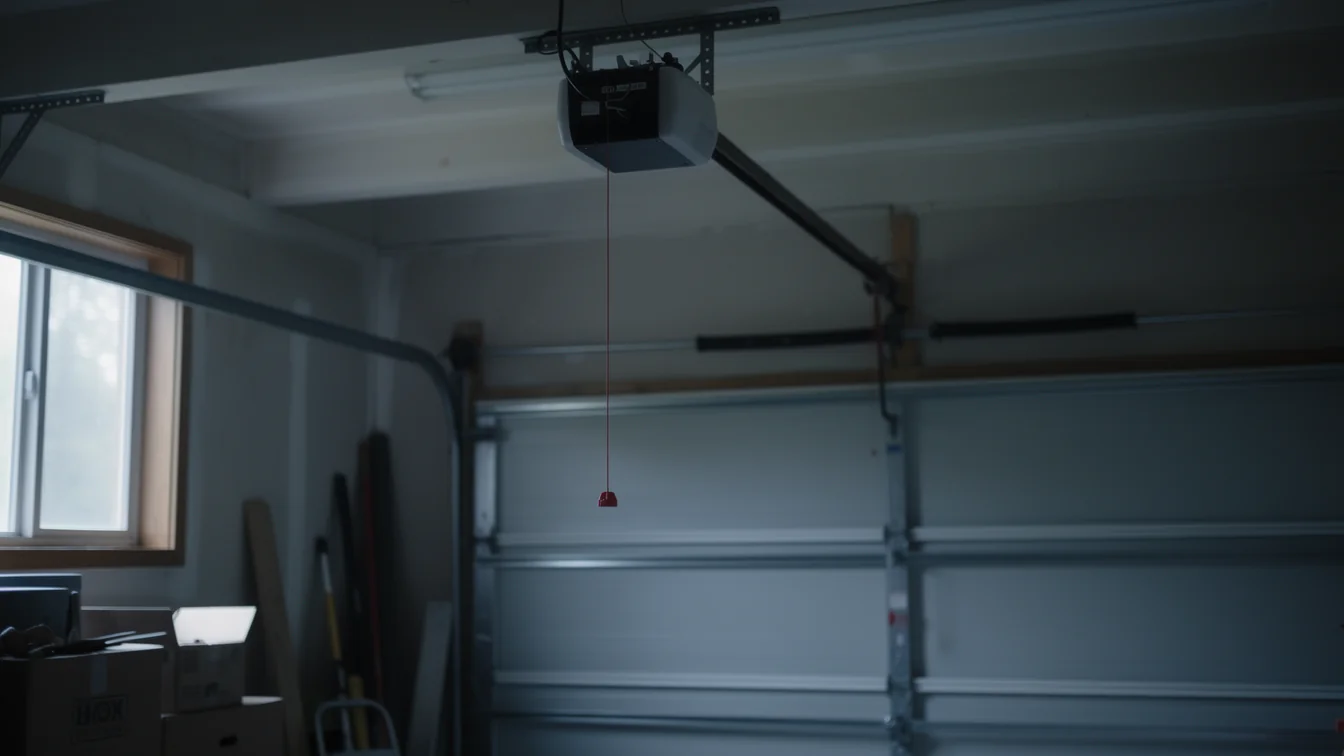
Rancho Cucamonga homes built mostly in the 1960s-70s run openers that predate battery backup and heat-rated boards.
Ready when you are
Need a garage door sorted in Rancho Cucamonga?
Rancho Cucamonga Garage Door Pros repairs and installs garage doors, springs and openers in Rancho Cucamonga, CA and the surrounding area.